

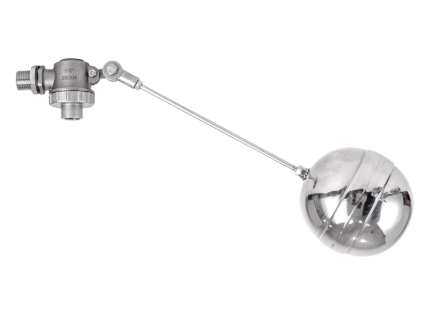
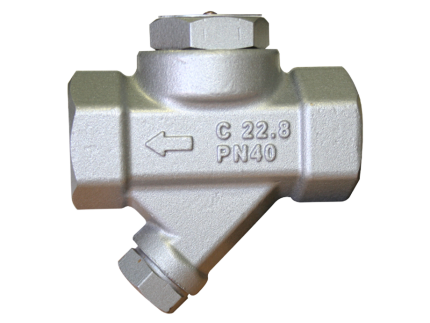



A float steam trap—more specifically a float and thermostatic steam trap (F&T trap)—is a device used in steam systems to automatically remove condensate (water formed when steam cools) while preventing live steam from escaping.
How it works
Inside the trap is a hollow metal float connected to a valve.
Basic operation
- Steam enters equipment and transfers heat.
- The steam cools and becomes condensate.
- Condensate flows into the trap body.
- As the water level rises, the float rises.
- The float opens the discharge valve.
- Condensate leaves the system.
- When the water level drops, the valve closes.
The “thermostatic” part usually vents air and non-condensable gases automatically during startup.
Main features
- Continuous condensate discharge
- Good for variable steam loads
- Handles large condensate volumes well
- Excellent air venting
- Maintains stable temperature in heat exchangers
Common applications
You’ll often find float steam traps on:
- Heat exchangers
- Unit heaters
- Steam coils
- Process vessels
- Laundry equipment
- Food processing systems
Advantages
- Very energy efficient when working properly
- Continuous drainage avoids condensate backup
- Good resistance to water hammer
- Performs well under changing loads
Disadvantages
- Larger and more expensive than simple thermodynamic traps
- Can be damaged by freezing
- Internal float can fail if water hammer is severe
- Requires proper installation orientation
Comparison with other steam traps
| Type | How it works | Best for |
|---|---|---|
| Float & thermostatic | Float opens valve based on water level | Process equipment, heat exchangers |
| Thermodynamic | Uses steam velocity/pressure difference | Steam mains, outdoor lines |
| Inverted bucket | Bucket rises/falls with steam and condensate | General-purpose industrial use |
| Thermostatic | Opens/closes based on temperature | Air venting, tracing lines |

Reviews
There are no reviews yet.